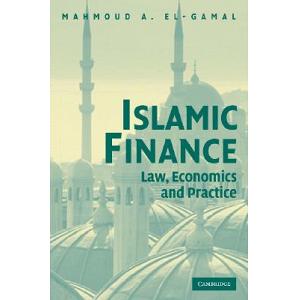
Islam commands us to refrain from charging interest and to share financial risk, seek to avoid the concentration of wealth and the economic exploitation of the weak and thereby prevent situations such as the current debt crisis from arising in the first place. The core belief in Islamic finance is that money should not in itself be an earning asset; therefore Islam prohibits any and all forms of interest. The Islamic approach to financing requires that financing be always intrinsically attached to real goods and service. Whether it is provided on the basis of sale, profit and loss sharing or output sharing, financing must be related to production or exchange of goods and services.
How to deal with the interest which you owe
If you do get yourself into a financial nightmare, there are ways to get back on track successfully and without ruining you’re yourself. Dua, budgeting and planning is important in achieving this goal.
Debt management programs, which are also known as credit counseling sessions, can save you a lot of money and years of paying on your debt if you have a good one (every mosque should have one)
A good management set-up is a third party who will contact your creditors to:
- Re-bargain your interest rate.
- Negotiate a payment structure with the creditor that you can afford.
- Determine a realistic amount of time for yor debt to be eliminated.
Keys to debt Management Programs:
Key factors to keep in mind when selecting a good debt management program:
- Your current creditors lower your interest rate and not just your payment.
- It is very important you continue to receive your statements to ensure no payments are past due.
- It is not a loan. The out-fit collects the payment from you and allocates it to your creditors.
- For someone who gets into a bad financial position, these programs can be the key to getting back on track.
- Most programs structure your payments to eliminate your debt in 4 – 5 years.
They make it so no new revolving accounts can be opened while participating in the program so once you have paid the debts off, you can have a fresh start.
Islamic Debt Financing
Debt has its strict rules and regulations in Islam. For one, interest is completely forbidden. Additionally, while debt is discouraged, for cases where a person must borrow money, the debtor and lender must enter into a contract, the rules of which are clearly stipulated in the Quran. In cases where a debtor has made the mistake of taking debt on interest, all efforts should be sought to get rid of the interest. When not possible immediately, the debtor should seek all means to reduce payment of interest rates on repayment of debt, whether through debt consolidation or other means - until the debt is paid off completely.
The huge debt that currently burdens many people has arisen from loans that have charged interest and have not shared risk between the lender and the borrower and have, therefore, contravened the two most fundamental principles of Islamic finance.
Islamic financing has been a viable alternative to western banking since the early 1970s and complies with the major concepts of Shari law, namely that:
interest (usury) should not be charged or collected;
no form of gambling be undertaken; and
no investment should be made in a business which is deemed to be unlawful under Shari law.
The essential basic concepts of Islamic financing are:
Ijarah - Leasing
Under this mechanism the position of Islamic bank shall be lessor and client as lessee. The client who is the lessee shall be allowed to use a particular asset that belongs to bank for a term called Ijara period for a pre-determined rent (ujrat). In ijara, the ownership will not be transferred to client but he receives usufruct of the asset. One of the significant features of this mechanism is that throughout the Ijara period the bank has to bear the risks associated with ownership of the asset. At the end of the ijara period the asset shall be reverted back to the bank or bank may gift it to the client subject to an independent agreement.
Ijarah structure entails the lender creating a special purpose vehicle (SPV) to purchase asset(s) that is the subject of the financing. In turn, borrower agrees to enter into a lease agreement to lease the asset(s). Lease payments act as part rental payments (the profit component) for use of asset and part repayment of principal debt.
Ordinarily transaction will take on the following elements:
borrower and lender enter into a purchase contract to buy asset that is the subject of the financing;
borrower and lender enter into a lease contract under the terms of which borrower agrees to lease asset that is the subject of the financing; on completion of the lease term, borrow can either make a balloon payment to purchase asset or, alternative, if the rental has included part principal payments, can pay a small sum to the lender in exchange for ownership of asset.
This type of Islamic financing structure is very similar to hire purchase contracts. As such, assets that are commonly the subject of this type of Islamic financing include motor cars, home appliance, electronic goods, etc.
Activity:
- Client approaches Vendor or supplier and collects relevant information.
- Client approaches Bank for ijara and makes promise to lease the asset from the bank upon purchase.
- Bank buys the asset from the Vendor.
- The ownership of asset shall be transferred to bank by Vendor.
- Bank leases out the asset to Client with possession for specified use.
Client pays fixed ijara rentals over future fixed period(s).
- Asset ownership gets reverted back to bank.
Murabaha - Cost plus financing/buy-sell arrangement
The term Murabaha is derived from the Arabic word Ribh that means profit.The Murabaha indicates a “Sale with Profit”.Murabaha is a contract of sale under which a commodity will be sold for a profit. It is one of the significant features of Murabaha that sellers have to tell the buyer his cost price and the profit.Under traditional Islamic Law, Murabaha is defined as “the sale of a commodity for the price for which it was acquired, with a profit”.Thus, the term murabaha means a contract of sale based on the purchase price plus profit margin.
Essentially works by borrower asking lender to purchase asset on the understanding that after lender has purchased asset, borrower will purchase asset from lender.
Agreement is made that lender on-sells asset to borrower at an increased price. Repayment can either be in one balloon payment or by way of installments over a period of time. If repayment is a balloon payment, more commonly known as a Bai’ Bithaman Ajil – or deferred payment sale agreement. Popular structure for purchasing real estate property. It should be noted, however, that as lender on-sells property to borrower, all land title deeds, etc. vest with the borrower. Thus, security provisions of such an arrangement need to be considered carefully so that the lender can adequately protect themselves.
Components of this type of Islamic financing include:
- on-sell arrangement;
- agreed mark-up on on-sell price;
- asset must be Shari compliant;
- asset must exist at the time of the transaction;
- thus, this cannot be utilized in futures trading transactions;
- all terms and conditions of the arrangement must be known by all parties at the time of entering into the arrangement;
- reoccurring expenses cannot be passed on to the borrower.
Activity :
- Client approaches the vendor of the commodity and collects all the relevant information.
- Client makes a promise to buy the commodity from the Bank upon resale at the marked-up price;
- Bank buys the commodity from vender on base price.
- Vendor transfers ownership of commodity to Bank;
- Bank sells and transfers the ownership of the commodity to Client at marked-up price;
- The marked-up price shall be paid, in full or in parts over future (known) time period(s), by the client.
Then, it looks at existing personal financing facilities offered by many Islamic banks such as bay al-‘inah, tawarruq and ar-rahn personal financing.
Bai'al-Inah - Sale and Buy Back
Similar concept to Murabaha. However, due to security concerns on default, structure is changed slightly. Lender purchases asset on behalf of borrower. Borrower purchases asset from lender on deferred payment basis. Asset is immediately resold to lender for cash at discount.
Bay al-‘inah is a sale with a repurchase or buy-back agreement between two parties,
Usually, bay al-‘inah is applied to provide cash advances to customers. It is deemed valid by some jurists since the cash advances were made possible by virtue of a sale agreement and not a loan.
In this manner, bay’ al-‘inah is sometimes viewed as a legal device (hilah) to circumvent the prohibition of riba.
Preferred financing mechanism if there is any danger that lender will become insolvent.
Musharakah - Partnership
It's can also be referred to as Islamic Venture Financing
An arrangement between a lender and a borrower where both parties agree to make a capital contribution towards financing a commercial operation.
Parties agree to share profits from the arrangement at a pre-agreed ratio.
Losses from the arrangement need to be shared pro-rata to the capital contributions of each of the parties.
Tawarroq Finance - Monetary Finance
- Lender agrees to purchase a commodity on behalf of the borrower.
- Lender sells commodity to the borrower.
- Borrower sells commodity to a third party buyer.
- Cash payment from third party buyer acts as monetary financing element of the transaction.
- Borrower repays lender in installments.
Tawaruq is a three party contract whose objective is to provide cash advances to the customer (mutawariqq) while providing profits to the financier, usually an Islamic bank. It is a sale and resale contract involving a third party. It is used by some Middle-east Islamic banks.
The transactions are explain as follows:
Mr. Ismail is looking for $50,000 cash to pay off his debt. He saw an on-line advertisement of al-Safa bank offering the tawarruq facilities. He sent the application documents to the bank for approval processing. Let’s assume that his application has been successful with full amount at 10 per cent profit rate per annum payable in 3 years.
To expedite the transaction, al-Safa Bank sells Asset Y to Mr. Ismail for ($50,000 + [0.1 x $50,000 x 3] = $65,000 with payment on deferred basis. Mr. Ismail pays the bank $65,000/36 a month for 36 months. This is the murabaha contract. We call it the asset purchase agreement (APA) between Mr. Ismail and the bank.
To acquire the $50,000 cash, Mr. Ismail has to sell Asset Y to company ABC. Usually the company ABC has business relation with al-Safa Bank where the former will buy Asset Y from al-Safa Bank’s tawarruq customers.
Here, company ABC pays Mr. Ismail $50,000 in cash in return for Asset Y. This is the asset sale agreement (ASA) between Mr. Ismail and company ABC (i.e the third party).
The above structure is known as tawaruq munazzam (ie organized tawarruq). This form of tawaruqq is found unlawful by the Fiqh Academy of Mecca. It says that tawaruqq is only permissible when the third party is independent from the 1st party (ie the bank). This is important to avoid any form of guarantees that Mr. Ismail can sell Asset Y for $50,000.
In trading, price is set by market forces, Tawarruq munazzam shows that there is some form of price rigging to secure the $50,000 sale price.
Qardul Hassan - Benevolent Loan
Consists of a loan given to a borrower on a “goodwill” basis, i.e. no interest or fees are charged
Borrower may, at their discretion, repay more than they borrowed
Seen as being the only “pure” form of Islamic financing loan as, unlike all the other financing structures, it makes no attempt to charge riba (interest), which is prohibited under Islam.
qardhu hasan or benevolent loan is not a loan for commercial use. It is strictly a loan for personal use.
Qard means loan while hasan implies good or benevolent. A qardhu hasan loan, therefore, expresses the spirit of cooperation (ta’awun) and brotherhood (ukuwah) between debtors and creditors. This is because the creditor expects nothing in return for the use of the loan All he needs is the repayment of the loan in full. The debtor holds obligation to return the principle loan. The debtor can also place a collateral (rahn) to support the loan.
When there exists severe reminders against loan defaulters, Prophet Muhammad S.A.W. encouraged borrowers to pay more than the principal loan.
The addition sum, however, are not contractually mentioned in the loan agreement. Narrated Jabir bin 'Abdullah: I went to the Prophet S.A.W. while he was in the mosque. After the Prophet S.A.W. told me to pray two Raka'at, he repayed me the debt he owed me and gave me an extra amount. On another occasion, the Prophet s.a.w. says, ”the best amongst you is he who repays his debts in the most handsome manner’’ (al-Bukhari).
The extra payment was not made contractually binding but released according to the paying capacity of the borrowing party and most important his willingness to give more.
In a society that upholds sadeqah as a virtue and noble action, a debtor is expected to give the creditor a hibah for the following reasons:
The debtor is thankful for the loan given by the public.
The debtor is concern that inflation may cut real value of principle loan.
The debtor understands that the creditor suffers loss of opportunity to earn alternative income if monies are invested elsewhere.
The debtor is an individual with iman and taqwa.
Mudharabah - Profit Sharing
Islamic investors agree that a Mudhareb (trustee) will provide skill and expertise.
Mudhareb agrees to hold and manage the assts for Islamic investors.
In return for providing services, Mudhareb earns an agreed share of profits from the assets managed on behalf of Islamic investors.
Mudhareb cannot claim any right to the assets - merely acts as manager and trustee of assets.
(Al Rahn) Pawn - Broking Business
A pawn-broking operation is relatively straight forward:
The borrower simply needs to place a pledge or security for the amount of debt needed. For example, the pledged asset is a gold ring valued at $2,000.
Should the customer not redeem the facility on maturity including the fees (ujrah) charged for safe-keeping, then the gold will be retained by the bank.
Thus, for gold valued at RM2,000 the margin of advance is RM1,000 and the relevant fees are 50 cents per RM100 in the value of the gold – this RM 2,000 / 100 x 0.5 = RM10 per month.
Given that interest (riba) is not implicated in the rahn pawn-broking business, how would a company running an Islamic pawn business (murtahin) make money?
The answer is simple. Profits take the form of storage fees charged on the pledged property. There is a standard formula how these fees are determined. For example, in the case of a pledge valued at $1,000, the pledger (rahin) is required to pay a storage fee, say a percentage of the total value of the pledge.
According to Bank Rakyat, a pledge valued at less than $1,000 will cost the rahin (1,000/100) x 40 sen or $4 a month. Normally, only about half of the pledge value is given to the rahin as an interest-free loan. Thus, a $500 loan payable in 6 months will incur a storage cost of $4 x 6 = $24.
On failure to pay the loan after a prolonged reminder, the operator holds the right to put the collateral on auction.. The rahn company will claim loan plus storage fees due to them. The surplus therein will be returned back to the rahin.
In case he cannot be located, the proceeds will be forwarded to the bait-ul-mal from which the rahin is entitled to make future claims.
At the end of the term, the rahin will pay the murtahin $524. The rahin can ask for periodic loan extension provided he pays an additional storage fee.
In case he cannot be located, the proceeds will be forwarded to the bait-ul-mal from which the rahin is entitled to make future claims.
In fact, al-rahn can be a better alternative to finance stocks purchases compared to credit cards and share-financing loans. At least the money an individual obtains via al-rahn is backed by productive assets.
The pawnee (murtahin) is not entitled to use the collateral (rahn), for his right is only in the possession of the pledge and not in its use. If the company uses the pledge for its own benefit without informing the debtor and then incurs a loss, it takes full liability for the loss incurred.
Salam - Advance Payment
A salam is contract for deferred delivery. It is in essence “a forward agreement where delivery occurs at a future date in exchange for spot payment of price”.This mechanism is unique to Islamic banks. It is does not have any proximity to conventional banking system. Under this mechanism the specified asset shall be purchased in advance by bank for a predetermined delivery date. Classically, the bank shall receive a discount for the advance payment and a profit margin. To avoid uncertainty the quality of the commodities, which shall be purchased, is fully specified. It is a significant feature of this mechanism that both parties benefit from this transaction.
Under this Islamic financing structure, purchaser agrees to make advance payment for asset/goods to be delivered at a future date.
It is essential that purchase price be paid at the time of making the agreement, and not on delivery of the asset/goods - failure to comply with this requirement would alter the nature of the agreement to that of a sale of debt against debt, which is prohibited under Shari law.
As Shari law stipulates that items must exist at time of contract, i.e. no futures contract, asset to be purchased must be clearly stated in the purchase agreement and the quantity and quality of the purchased asset must be capable of being specified exactly – there can be no room for dispute.
Assets must be goods and cannot not include commodities; such as gold, silver or money.
The exact date and place of delivery of the asset/goods must be specified in the agreement.
Istisna’a is another Islamic financing structure that follows almost exactly the same concept as found here
Istisna'a
Istisna'a is an exclusive mechanism in Islamic banks. There is no alternative to this tool in the contemporary banking system.It is “a sale transaction where a commodity is transacted before it comes into existence. It is an order to a manufacturer to manufacture a specific commodity for the purchaser. The manufacturer uses own material to manufacture the required goods”. The unique feature of istisna is that nothing is exchanged on spot or at the time of contracting. A contract made for those objects that have to be manufactured or constructed is only valid under this mechanism.
It is one of the conditions of Istisna that the price must be fixed with consent of all the parties involved. An Istisna contract without the important specifications of the commodity is void. One of the significant features of Istisna is that either of the party's can cancel the contract, by giving a prior notice, before the manufacturing party has begun their work.
Istisna'a can be used by Islamic banks for manufacturing of high technology goods like aircrafts, ships, buildings, dams, highways, etc. In this mechanism the client asks the bank to manufacture or construct an asset with clear specification. Then the bank asks the manufacturer to construct or manufacture the asset which is asked by the client. The manufacturer gets periodic payments for the inspection of work progress. When bank gets delivery of the asset from the manufacturer then the bank delivers the asset to the client. Client pays for the asset in full or in instalments over a redetermined period of time. Project financing at Islamic development bank is a classical example of this tool.
Islamic Financing Principles
Islamic Financing avoids interest-based transactions (riba), and instead introduces the concept of buying something on the borrower’s behalf, and selling it back to the borrower at profit. In place of interest, a profit rate is defined in the contract. Like Conventional Financing, profit rates can be a fixed rate, or based on a floating rate (e.g. BFR).
The majority of Islamic home financing options in Malaysia today are based on the Bai Bithamin Ajil (BBA) concept. A small number of alternatives are based on the Musyarakah Mutanaqisah (MM) concept (which will not be covered in this article).
BBA
The principal amount, tenure and profit rate determines the “sale price” and the profit earned by the lender. Like Conventional financing, payments are deferred over installments.
The loan contract for BBA Islamic Financing is known as a Sale and Buy-Back Agreement.
Benefits of Islamic Financing over Conventional Financing
As part of the Malaysian Government's efforts to promote Islamic Financing in general
For an indefinite amount of time, there will be a 20% stamp duty discount for Islamic Loan Agreement documents. Note: In conventional financing, there are only 2 legal docments necessary - Facility Agreement and Charge documents. But for Islamic financing, there are at least 3 (for some products 4), which brings up the total legal costs.
In cases of refinancing from Conventional to Islamic packages, there will be a 100% stamp duty waiver on the existing refinance loan balance. This is not applicable to any amount over and above the existing refinance loan balance.
Benefits of BBA Islamic Financing
For floating profit rates, profit rates are capped at a maximum. Conventional floating interest rates have no such cap
Late settlement of loans can incur lower charges than Conventional loans as there is no concept of compounding interest calculation. However, in practice, other fees and charges may apply that could offset this benefit
Benefits of Conventional Financing over Islamic Financing
For Conventional loans, if a borrower alters the terms of the finance (E.g. Increase the facility amount), the Loan Facility Agreement would only need to be up-stamped. For Islamic financing, a new Sale And Buy-back Agreement (BBA) needs to be drawn up, making it more expensive.
Islamic financing have difficulty in restructuring or refinancing in the case of default
Your costs for early settlements, late payments or defaults are more transparent in the contract as compared to Islamic financing.
Anyone (not just Muslims) can take up Islamic financing. But if your occupation is not deemed “halal”, there could be difficulty in obtaining the loan.
Read More:
- soundvision
- loanstreet
- hilalplaza
- lawteacher
- muslimmatters
- DEPOSITS AND FINANCING PRACTICES OF ISLAMIC FINANCIAL INSTITUTIONS CHAPTER 8 : INTEREST-FREE PERSONAL FINANCING COMPILED BY HAMDAN HJ IDRIS, BSc Econs, MBA (Islamic Banking & Finance)
Certified Professional Trainer (MIM)
- Alsadek H. Gait and Andrew Worthington, ‘A Primer on Islamic Finance: Definitions, Sources, Principles and Methods', (2009), Discussion Paper, Griffith University
- Obaidullah, M, “Islamic Financial Services”, (Scientific Publishing Center, Jeddah, Saudi Arabia, 2005).